

Hairballs. . . Gross!
(Part 4 of Learning on Edge Series)
MacKenzie’s metaphor from Orbiting the Giant Hairball is gross (there, I just had to get that out of the way). But the metaphor pairs naturally with the concept of the Learning Edge as it describes the tension leaders experience when trying to stay close enough to influence a system without getting trapped by it.
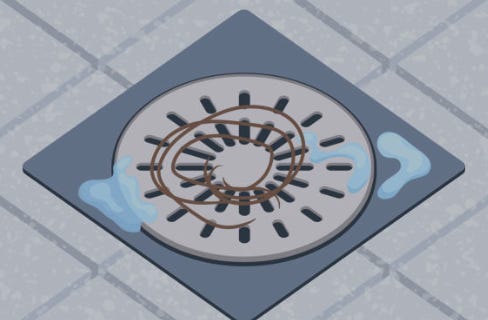
In MacKenzie’s framing, the “hairball” represents the accumulated weight of organizational life: norms, expectations, policies, protocols, habits, legacy structures, unwritten rules, and the inertia of “how we do things here.” Every organization, from schools to nonprofits to corporations, builds a hairball over time. The danger is not that the hairball exists; the danger is that its gravity is strong. Fall into it, and creativity gets smothered. Drift too far from it, and your influence on the system (the accumulated weight of the organization) diminishes. The ideal position is orbit: you stay tethered to the organization’s purpose while maintaining enough independence to see possibility and generate new approaches.
What MacKenzie hints at is that orbit is both about distance and direction. Many leaders unintentionally orient their orbit inward, maintaining their attention on the hairball itself: the compliance tasks they must navigate, the constraints they hope to avoid, the crises that pull their attention back toward the center. Inward-facing orbit creates leaders who spend more time trying not to fall in than they do imagining where the organization might go. It preserves safety, but minimizes growth.
This is where the learning edge becomes critical. When leaders actively pursue their learning edge and intentionally recenter their navigation around it, they rotate their orbit outward. The gravitational pull of tradition, bureaucracy, and habit still exists, but it no longer determines the direction of their movement. Instead of watching the hairball, leaders point their attention toward the frontier—the outer boundary where learning, curiosity, and new possibilities live. The recenter metaphor from Part 3 becomes a practical tool here: leaders place the pin of the organizational map on the learning edge and orient their decisions around that position. The edge becomes the new home screen, not an occasional destination.
Sustained orbit requires leaders to treat the learning edge as the center of their work. When leaders operate from this orientation, they adopt a posture of readiness. They expect new information to reshape old assumptions. They treat uncertainty as a signal, not a threat. They understand discomfort as evidence of growth rather than instability. This mindset is particularly important in schools, where the formal center—pacing calendars, grading structures, rigid routines—often remains unchanged while the learning needs of students evolve rapidly. Young people live on the edge by definition; adolescence is an extended encounter with uncertainty, identity formation, and boundary-testing. Preparing students for a complex world requires educators whose own leadership center has migrated closer to the outer boundary.
Relocating the center of organizational work to the learning edge is not abrupt disruption. It is deliberate evolution. Instead of asking how to bring the team to the edge, leaders ask how to bring the center to the edge. This is the foundation of changing management—the ongoing movement of the organizational center toward the frontier where learning and improvement occur. When leaders press “recenter” on their internal navigation and anchor it at the edge, the organization gains a more adaptive posture. The landscape becomes dynamic by design, and the old center becomes historical reference rather than a gravitational force.
This progression leads to an essential question for leaders to reflect on:
If you pressed the recenter button on your organization’s internal map and it placed the pin on your actual learning edge rather than your familiar routines, what new conversations or decisions would rise to the surface immediately?
And what would you need to release from the gravitational pull of the old center in order to stay oriented toward the frontier instead of drifting back into the hairball?